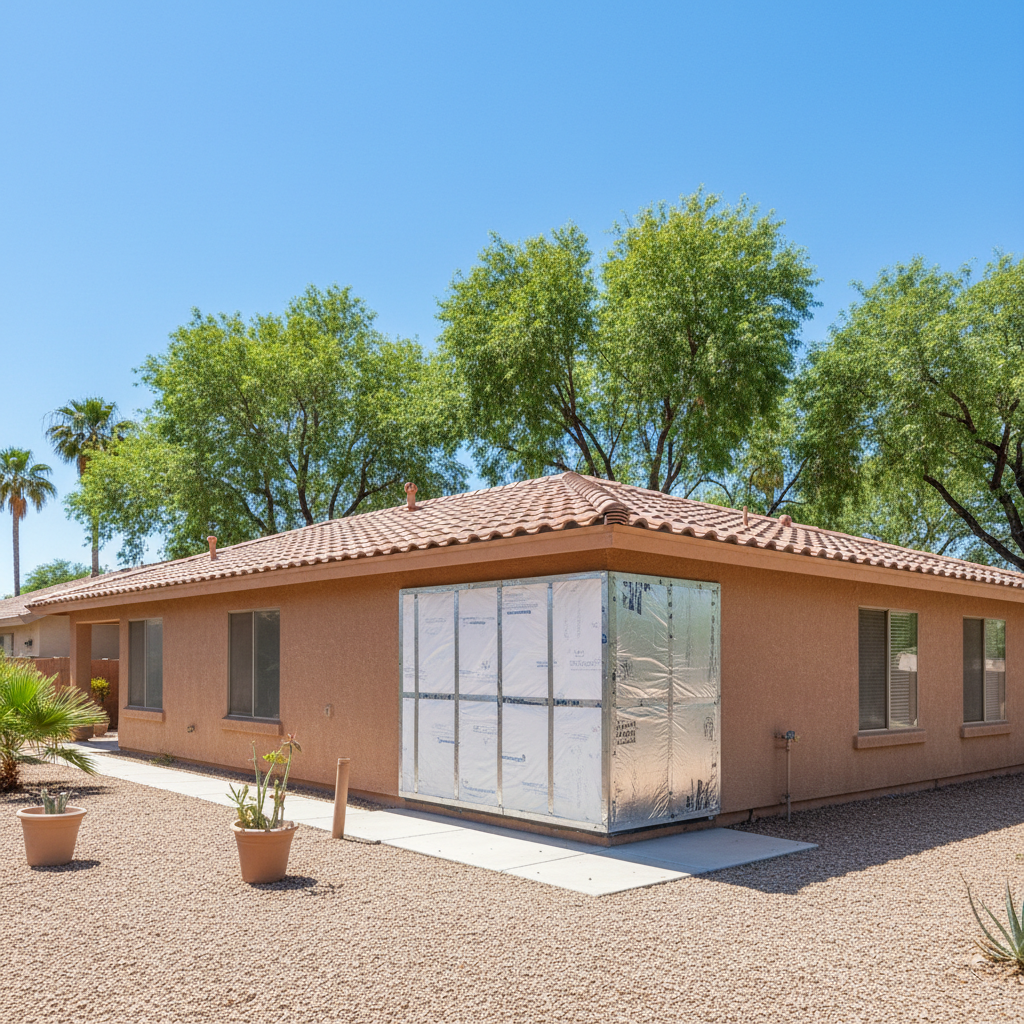
Alright, let's talk basements. You might be thinking, "Basements in Mesa? Don't we mostly have slab foundations out here?" And you'd be right, for the most part. A lot of homes, especially those built in the last few decades in places like Eastmark or Cadence, are on slabs. But you'd be surprised how many older homes, particularly in established neighborhoods closer to downtown Mesa or even some custom builds in the foothills, actually have basements. If you've got one, or you're thinking about finishing one, we really need to talk about insulation.
Why Mesa Basements Need Special Attention
See, a basement isn't just a basement here in the Valley of the Sun. Our climate throws some unique challenges at them. You've got the intense heat above ground, sure, but also the ground itself. Even a few feet down, the soil temperature can fluctuate, and that impacts your basement's comfort and efficiency. Plus, we don't deal with the same freezing and thawing cycles that folks up north do, but we do have our own moisture considerations, especially with our monsoon season. You definitely don't want to trap humidity down there.
I've seen it firsthand: uninsulated or poorly insulated basements can be a real drag on your HVAC system. They can feel clammy, cold in the winter (yes, it gets cold enough here!), and just generally uncomfortable. And that's not even touching on the potential for energy waste, is it?
Common Basement Setups Around Here
So, what kind of basements are we usually dealing with? I typically see a few scenarios:
- Older Homes with Existing Basements: These might be partially finished or completely unfinished. The original builders often didn't put much thought into modern insulation standards, if any. You'll often find concrete block walls, sometimes painted, sometimes bare.
- Newer Custom Builds: Every now and then, someone building a custom home will opt for a basement. Usually it's for extra living space, a home theater, or even a wine cellar. These are often built with modern construction techniques, but still need proper insulation planning.
- Retrofit Projects: This is where a homeowner decides to finish an existing unfinished basement. This is a prime opportunity to get the insulation right from the start.
Regardless of what you've got, the goal is the same: create a comfortable, energy-efficient, and healthy living space.
Your Insulation Options for Mesa Basements
When it comes to insulating basement walls in our climate, you've got a few solid choices. What's best really depends on your specific situation, the type of wall, and your budget.
- Rigid Foam Boards: These are great for concrete or masonry walls. They provide a continuous layer of insulation, which helps prevent thermal bridging (that's heat escaping through the studs). They're also resistant to moisture, which is a big plus for basements.
- Spray Foam Insulation: This is often my top recommendation, especially for basement walls. Closed-cell spray foam, in particular, creates an airtight seal and acts as a vapor barrier. It adheres directly to the concrete, filling every crack and crevice. This is crucial for keeping out both heat and humidity. Here at Spray Foam Pros of Mesa, we've done countless basement projects, and the results are always outstanding.
- Fiberglass or Mineral Wool Batts with a Vapor Barrier: If you're building out stud walls in front of your concrete, you can use traditional batts. However, you absolutely need to pair them with a proper vapor barrier on the warm-in-summer side (which is usually the exterior side of the wall in Mesa, but for a basement, it's more nuanced — often best to put it on the interior side of the insulation layer, or just let the spray foam handle it). You also need to make sure there's no air gap behind the batts, or you'll lose a lot of their effectiveness.
You also need to think about insulating the rim joist – that's the band around the top of your foundation where the floor joists rest. It's a huge source of air leakage and heat transfer if it's not sealed and insulated properly. Spray foam is fantastic for this spot because it seals all those little gaps.
Local Expertise Matters
Look, anyone can read a general guide about basement insulation. But understanding how our specific Mesa climate, our soil conditions, and our common construction types impact that insulation? That's where local expertise comes in. We know what works here, what lasts, and what's going to give you the best bang for your buck in terms of comfort and energy savings.
You don't want someone guessing about vapor barriers or R-values for a Mesa basement. You want someone who's done it before, who understands the unique challenges of keeping a subterranean space comfortable and dry in a desert environment. A well-insulated basement can transform a dusty storage area into valuable living space, a cool retreat from the summer sun, or simply a more energy-efficient part of your home. Get it right the first time, and you'll be glad you did.