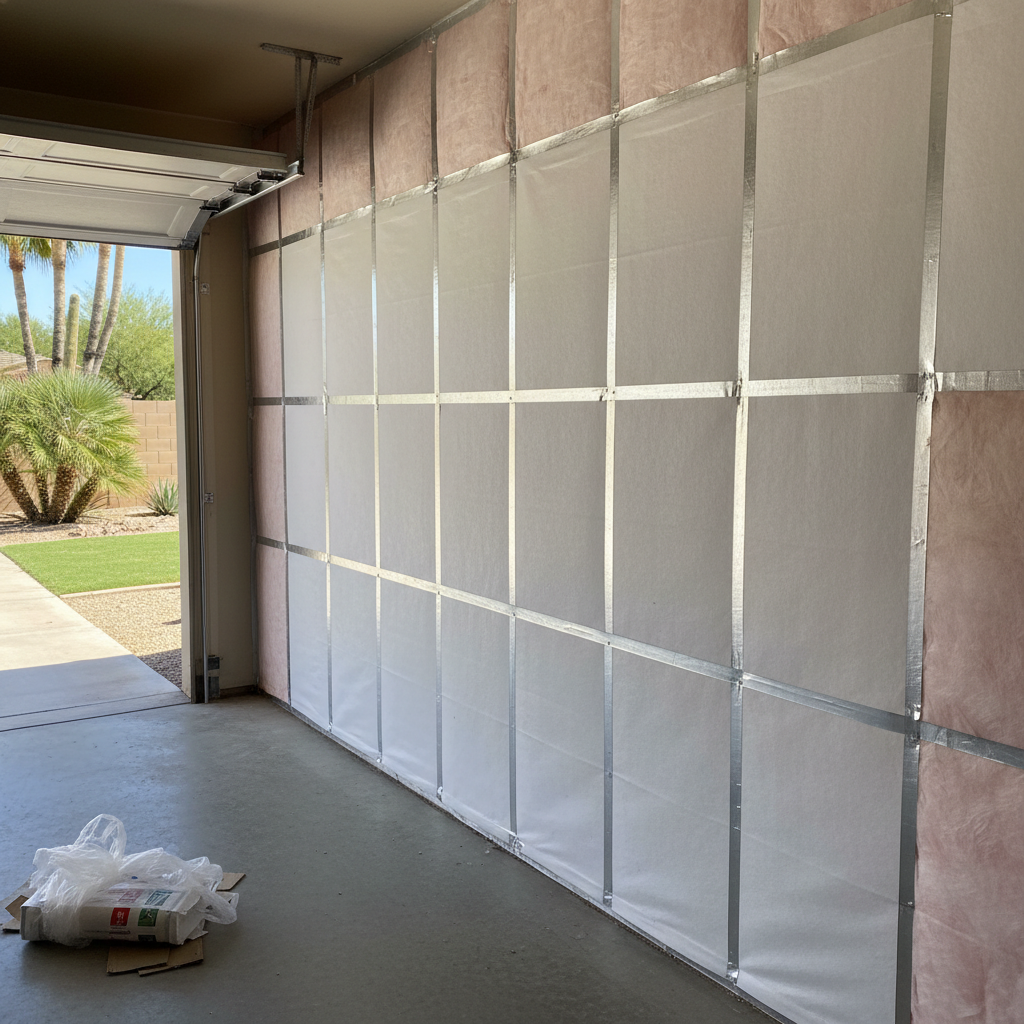
Your garage in Mesa, AZ, is probably the least comfortable room in your house, right? Especially in July when it feels like an oven, or those few weeks in winter when it actually gets chilly. I hear it all the time from folks around here, whether they're in a newer build out in Eastmark or an older place near downtown. A lot of you use your garage for more than just parking cars – it's a workshop, a gym, a storage area, or even an extra hangout spot. So, insulating it makes a lot of sense. Let's get into the questions I get asked most often about insulating garages.
Do I really need to insulate my garage walls and ceiling if it's not attached to the house?
That's a common one, and my answer is usually, 'It depends on what you use it for.' If you're just parking your car and storing some tools that you don't care about getting hot, then maybe not. But if you're spending any real time out there, or if you've got temperature-sensitive items like paint, electronics, or even a second fridge, then absolutely, you should insulate it. An uninsulated detached garage in Mesa will hit triple digits inside even when it's only 90 degrees outside. Insulation helps keep that temperature in check, making it more comfortable and protecting your stuff. Plus, if you ever decide to add AC or heating to that space, the insulation will make it a million times more efficient.
What's the best type of insulation for a garage in Mesa?
For garage walls and ceilings, you've got a few good options. What's 'best' really depends on your budget and what you're trying to achieve. For existing walls, blown-in cellulose or fiberglass can work if there's an empty cavity. It's affordable and does a decent job. If you're building new or opening up walls, fiberglass batts are common. They're cost-effective and easy to install. But if you want the absolute best performance, especially for our Mesa heat, I always recommend spray foam insulation. Closed-cell spray foam creates an airtight seal, stopping air leakage and providing a fantastic R-value per inch. It's a bit more expensive upfront, sure, but the energy savings and comfort it provides, particularly in our extreme climate, are unmatched. We do a lot of garage spray foam jobs at Spray Foam Pros of Mesa because it just makes sense here.
Should I insulate my garage door too?
Yes, absolutely. This is a big one that often gets overlooked. Your garage door is essentially a massive uninsulated hole in your garage. Think about it: it's a huge surface area directly exposed to the sun and outside temperatures. Insulating it can make a noticeable difference in the overall temperature of your garage. You can buy pre-cut insulation kits for most standard garage doors, or you can have a professional install rigid foam panels. Even a basic kit will help reduce heat transfer significantly. Don't skip this step if you're serious about making your garage more comfortable.
Will insulating my garage lower my energy bills?
It can, but maybe not in the way you're thinking. If your garage is attached to your home and shares walls or a ceiling with conditioned living space, then yes, insulating the garage will absolutely help lower your home's energy bills. It creates a thermal barrier, reducing heat transfer into your house during the summer and out of it during the winter. This means your HVAC system won't have to work as hard to maintain your indoor temperature. If your garage is completely detached and you're not conditioning it, then it won't directly impact your home's energy bill. However, if you add a mini-split AC unit to that detached garage, the insulation will make that unit run far more efficiently, saving you money on that separate utility bill.
What R-value should I aim for in my Mesa garage?
R-value is a measure of thermal resistance – basically, how well the insulation stops heat flow. For garage walls that aren't shared with the house, I generally recommend at least an R-13 to R-15 for batts or blown-in. If you're going with spray foam, you'll get a higher effective R-value with less thickness, often around R-19 to R-21 for a 2x4 wall. For garage ceilings, especially if there's an attic space above or a room above, you want to aim higher, similar to your home's attic, which is typically R-38 to R-49 in our climate zone. The higher the R-value, the better the insulation performs. Given Mesa's intense summers, going a bit higher than minimum recommendations is usually a smart move.
Can I insulate my garage myself, or should I hire a pro?
Some parts of garage insulation are definitely DIY-friendly. Installing rigid foam panels on a garage door, for example, is a project many homeowners can tackle. If you're dealing with open wall cavities and want to install fiberglass batts, that's also doable with the right safety gear. However, for blowing in insulation or especially for spray foam, I strongly recommend hiring a professional. Blown-in insulation requires specialized equipment, and spray foam is a complex chemical process that needs trained applicators to ensure proper mixing, application, and safety. Messing up spray foam can lead to big problems down the road. Plus, a pro will know how to seal up all those little air leaks you might miss, which are crucial for performance.
What about insulating the garage door itself? Is that worth it?
Definitely. I mentioned it earlier, but it really deserves its own point because it's such a common question and often overlooked. Your garage door is typically thin metal or wood, offering almost no thermal resistance. On a 110-degree day in Mesa, that door can get scorching hot, radiating heat directly into your garage. Adding insulation to it, even a basic reflective foil kit, can drop the surface temperature significantly and reduce the amount of heat entering the space. It's one of the most cost-effective ways to improve your garage's comfort, especially if you're not ready to insulate the whole thing.
How long does garage insulation last?
That depends on the type. Fiberglass and cellulose, if installed correctly and kept dry, can last for decades, often for the lifetime of the home. They don't really degrade much unless they get wet or compressed. Spray foam insulation is even more durable. Once it cures, it's a stable, rigid material that won't settle, sag, or lose its R-value over time. It also acts as an air and moisture barrier, which helps protect the structure itself. So, when you invest in good garage insulation, especially spray foam, you're looking at a solution that will perform for a very long time.
Hopefully, this clears up some of your questions about insulating your garage here in Mesa. It's a smart investment for comfort, protecting your belongings, and potentially saving on energy bills. If you've got more questions or want to talk specifics about your garage, don't hesitate to reach out.